The Hugo Profile for Julia
About Your Profile
This report is designed to help you discover how you learn, what inspires you, and where your interests could take you next by turning your reflections into a personal portrait of growth. Our aim is to help you get to know yourself better by revealing the patterns behind your motivation, focus, and goals. You’ll see below that your profile ends with a personalized roadmap, connecting what you’ve shared with us about yourself to real-world ideas, projects, and next steps for growth.
Everyone reflects differently. Some people write pages of ideas; others prefer short, direct answers. We’ve adjusted for that, so your report captures your thinking style and strengths, no matter how you expressed them. Your Hugo Profile is a reflection of what you shared, interpreted through research on learning, purpose, and motivation so you can better understand how you learn and grow.
How to Read Your Report
Start with Your Purpose Profile. Here you’ll see what sparks your curiosity and connects to your sense of purpose — the “why” behind what matters to you. Look for descriptions that feel accurate or surprising, and think about how they show up in your classes or interests.
Explore Your Learning Identity. This section maps how you focus, stay motivated, and approach challenges. Think of it as a mirror that helps you see your current learning patterns, not a scorecard — and that can shift over time based on new experiences and growth.
Check Out Your Hugo Roadmap. The final section suggests ideas and next steps that could help you grow. These aren’t instructions; they’re possibilities for you to explore and make your own, and include a combination of courses, projects, or mentorship directions.
roadmap-heading-2
roadmap-body -
Your profile offers a snapshot of how you learn and what currently motivates you. Insert section about the quality of their responses.
About Purpose
Why do we start with purpose? Purpose is the compass that guides every step of a meaningful life, no matter how small. Living a purposeful life helps you stay motivated, make better decisions, and build a future that feels meaningful. When you know your purpose first, decisions about what to study, what career to pursue, or where or when you should recalibrate or change directions all become easier and more intuitive.
So what is purpose? Simply put, purpose is your sense of where you’re going in life and why it matters to you. You can start determining your purpose by figuring out your interests and strengths, then iteratively exploring how to use them to make a difference in the world. It starts with having goals for your future, then figuring out your steps to reach those goals. Your purpose may change over your lifetime, but your values will always provide the foundation as you build out your behaviors and habits.
Figuring out your purpose
Influencers, lifestyle brands, and product marketers often use the language of purpose without offering any of the real benefits of a purpose-driven life. You can identify your real purpose by keeping three requirements in mind:
- Real purpose harnesses personal meaning to keep you engaged and motivated.
- Real purpose involves beyond-the-self intention, connecting your goals to the broader world.
- Real purpose requires a long-term commitment as your work towards your goals.
So, when you’re developing your purpose, ask yourself:
- Is this meaningful to me (does this give me energy)?
- Does this benefit only me, or does this expand to impact others in my life or in the world?
- Am I committed enough to see this through? And do I see this lasting throughout this phase of my life?
By emphasizing the three pillars of purpose, you’ll be setting yourself up for a life of meaning, intention, and productivity.
roadmap-heading-2
roadmap-body -
Your profile offers a snapshot of how you learn and what currently motivates you. Insert section about the quality of their responses.
Purpose Profile
Your purpose
Your responses suggest your sense of purpose is forming around turning ideas into working solutions, especially when design, technology, and real-world problems meet. You return to making, testing, and improving rather than only imagining, as shown when a design project failed and you “kept testing different ideas” until it worked better. Your interest in Big Battery Energy Systems connects your curiosity about engineering with a wider concern for “climate change,” which gives your creativity a direction beyond personal enjoyment. At the same time, your future goals are not fully settled, and this is completely appropriate for this stage. The missing link may be turning your interest in design, coding, and renewable energy into small projects that reveal what you want to pursue more deeply. The roadmap that follows is designed to help you bring those pieces together and move from interest to direction.
Personal meaning
Your responses suggest that you are most energized when ideas can become something visible, useful, or functional. Design and Realization stands out because it matches your interest in making, while your curiosity about coding points toward creating websites, apps, or digital projects of your own. Your interest in battery energy systems adds a practical engineering layer to that creativity. You may find that your strongest motivation appears when a project gives you room to imagine, build, test, and improve something that has a real purpose.
Beyond-the-self intention
Your sense of impact is already developing in a meaningful way, especially through your interest in climate change and your wish to be remembered as fair, helpful, and a problem solver. Your responses suggest that solving problems is not only about personal achievement for you; it also connects to helping people and improving systems around you. As you grow, you may strengthen this by choosing projects where your creativity supports a community need, such as sustainability, accessibility, or clearer ways for people to use technology.
Long-term commitment
Your responses show a strong willingness to stay with difficult problems, especially when you described testing different approaches until your design project worked better and rated persistence highly. At the same time, you are still learning how to manage time while balancing schoolwork, hobbies, and projects, which is very normal at this stage. Your next growth step may be choosing one small project connected to design, coding, or energy, then setting repeatable checkpoints so your determination has a clear structure to move through.
roadmap-heading-2
roadmap-body -
Your profile offers a snapshot of how you learn and what currently motivates you. Insert section about the quality of their responses.
Learning Identity Profile
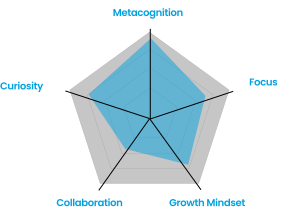
Your Learning Identity Profile is a snapshot of how you learn. It reflects the habits and mindsets you bring to new ideas, challenges, and working with others. By showing your levels across key dimensions, it helps you understand what supports your learning today and where you can keep growing. This foundation also shapes your sense of purpose and helps guide the Roadmap that points to real pathways and experiences you may want to explore next.
Your responses suggest that you learn best when ideas become visible, practical, and connected to real problems. You show a strong pattern of creative problem-solving: design, making, engineering, renewable energy, coding, and climate solutions all point toward learning through building and improving systems. You value clarity from teachers and feedback, especially when it tells you exactly what worked and what to change, so structure helps you turn ideas into action. At the same time, you are comfortable experimenting when a plan does not work, as shown by testing different approaches in a design project until the solution improved. You seem to do your deepest thinking alone and away from distractions, while also gaining energy from exchanging ideas and serving as an idea generator with others. You combine big-picture concerns, like climate change, with detail-oriented tools, like step-by-step directions and visual examples. At this stage, your learning identity is still evolving as you connect creativity, usefulness, and problem-solving.
The Scholar Compass
Each dimension represents a learning pattern inferred from your reflections — not a score or label, but a way of understanding how you learn best right now.
Curiosity:
3
Metacognition:
3
Focus:
4
Collaboration: :
4
Growth Mindset:
3
Curiosity
Describes how you explore new ideas, ask questions, and seeks understanding beyond what’s required.
Your responses suggest high curiosity, especially around practical innovation. Your interests are focused around design, technology, engineering, energy systems, coding, and making, with creative subjects like art and media adding breadth as you grow.
Metacognition
Captures how you learn from experience, connect insights, and deepen understanding through self-awareness.
You are aware of how you learn, especially through clear, specific feedback and visual or step-by-step explanations. Your design project reflection shows you noticed patience and testing as learning tools, a useful insight to keep developing.
Focus
Represents how you sustain attention, organize efforts, and maintains engagement in meaningful tasks.
Your focus shows strong domain clustering rather than scattered interests. Design, making, engineering, coding, renewable energy, and climate solutions all connect around building useful systems, suggesting depth in creative-technical problem-solving over multitasking across unrelated areas.
Collaboration
Reflects how you work with others, contribute to shared goals, and learn through dialogue and teamwork.
You value collaboration as a way to improve ideas, shown by your strong enjoyment of exchanging ideas and your natural role as an idea generator. You also describe yourself as supportive and helpful, which gives teamwork a constructive purpose.
Growth Mindset
Reflects how you view challenges and mistakes — as setbacks to avoid or opportunities to learn and improve.
You respond well to challenges when feedback is clear and specific, and you keep working when problems become difficult. Your design example shows comfort adjusting plans through trial and error, while your goal to manage time reflects ongoing growth.
roadmap-heading-2
roadmap-body -
Your profile offers a snapshot of how you learn and what currently motivates you. Insert section about the quality of their responses.
The Hugo Roadmap
The Hugo Roadmap connects your learning motivations and purpose themes to real-world directions — showing how your interests can grow into future studies, projects, and impact.
Volunteerism
Using the extracted themes/preferences, propose 4–6 types of volunteer roles that match this student (role types, not organizations). For each: (1) role type name, (2) why it fits in 1 sentence, (3) what to look for (2–3 concrete features like ‘clear weekly tasks,’ ‘data entry/research,’ ‘structured tutoring,’ ‘event-based,’ ‘behind-the-scenes’)
Your responses suggest that volunteer work will feel most meaningful when it lets you turn ideas into something practical, especially around design, technology, making, or climate solutions. Because you do your best thinking with clear instructions, visual examples, and some quiet processing time, you may find strong fit in roles that combine structure with room to test ideas and improve them.
You could explore environmental technology support, where you help gather information, organize data, or create simple visuals about renewable energy and battery systems; this fits your curiosity about how clean power reaches homes. A design or maker assistant role could involve preparing materials, testing prototypes, repairing items, or helping set up hands-on projects, which connects directly to your patience with problem-solving. STEM tutoring or peer mentoring could let you explain steps, talk through ideas, and give specific feedback to younger students. Digital media or web support could involve updating pages, designing simple graphics, or building small tools as you learn coding. Hands-on environmental projects, such as cleanups or sustainability projects, may also appeal because they offer visible results and practical action.
As a next step, you might take initiative by proposing a small design-based service project with clear weekly tasks. For a deeper dive, consider focusing on climate technology and exploring how design, coding, and engineering can support cleaner energy systems.
roadmap-heading-2
roadmap-body -
Your profile offers a snapshot of how you learn and what currently motivates you. Insert section about the quality of their responses.
Outside-the-Classroom Experiences
If you're excited about what you've read in this report and want to work on expanding your skills/interests, we've assembled some ideas that you might want to consider for independent research.
Your responses suggest that you do your strongest thinking when you have quiet space to focus, clear visual examples, and step-by-step expectations. At the same time, you appear to enjoy developing ideas with others once you have had time to process them. That combination fits experiences where you can work independently on a design or technical challenge, then bring your ideas into a team setting for feedback, testing, and improvement. You highlight a strong connection between making, design, engineering, coding, and climate-related problem solving. Your interest in battery energy systems and renewable power suggests that meaningful experiences may be ones where creative building connects to real-world systems. Because your future goals are still forming, outside experiences can help you test whether you are more energized by hands-on building, technical problem solving, creative digital work, or sustainability-focused impact.
Battery Storage and Renewable Energy Design Club
A local or online engineering, sustainability, or maker club focused on renewable energy systems would let you explore how ideas become working models. This fits your interest in Big Battery Energy Systems and could lead to a prototype, visual explanation, or small-scale energy design project.
Climate Technology or Engineering Design Competition
A structured competition centered on sustainability, product design, or engineering would give you a clear problem, deadlines, and a tangible goal. Your responses suggest you tend to stay with difficult problems and test different approaches, so this setting could help you build a design proposal, model, pitch, or demonstration.
Guided Research Program in Renewable Power Systems
A supervised research program, internship-style experience, or pre-college course with clear expectations could help you investigate topics like battery storage, grid reliability, or clean energy design. Because you value specific feedback and clear structure, a guided format with a final report, presentation, or portfolio piece may fit better than open-ended independent research.
Web and App Building Studio for Creative Projects
A coding, web design, or app development group would connect your interest in technology with your desire to create your own projects and ideas. You may enjoy building a website, interactive tool, or app concept related to climate, cycling, swimming, reading, or another personal interest.
Design, Engineering, and Sustainability Mentorship Circle
A mentorship or discussion community with students and professionals in design, engineering, or climate technology would let you exchange ideas while still having time to prepare your thinking. You could take on a small leadership role by sharing project updates, organizing feedback sessions, or presenting a design solution.
As you explore options, consider working with a school or college counselor to identify current local, online, and summer opportunities that match your grade level and schedule. Programs change frequently, so treating each experience as a test run can help you notice what energizes you, what feels less engaging, and which kinds of projects make you want to keep improving
roadmap-heading-2
roadmap-body -
Your profile offers a snapshot of how you learn and what currently motivates you. Insert section about the quality of their responses.
Independent Study
Independent study is a chance to take one of your interests and turn it into a real product, something you can build, test, and share. Projects tend to work best when they have a clear question, a simple method, and a finished deliverable that shows your thinking. Ideas to explore include:
Design a Home Renewable Energy Storage Model
Explore how big battery energy systems store renewable energy and help supply power to homes, a topic your responses suggest has already caught your attention. You could research how batteries connect to solar or wind power, sketch a simplified system diagram, and build a small visual model or digital prototype that explains the energy flow step by step. This fits your interest in climate change, design, and making because it turns a real-world problem into something tangible and visual.
Build a Climate Solutions Website
Build a simple website that explains one climate change solution, such as renewable energy storage, greener transportation, or energy-efficient design. You could learn basic HTML/CSS, organize the information into clear sections, and include diagrams or visuals to match the way you often learn best. This project connects your interest in coding, websites, design, and helping solve climate issues while giving you a finished digital product to share.
Analyze Cycling as Sustainable Transportation
Investigate how cycling can reduce emissions in a city like New York and what design choices make biking safer and more practical. You could combine research, maps, photos, and a short comparison of different street designs, then create an infographic or presentation with your recommendations. This fits your profile because it connects your enjoyment of cycling with your problem-solving mindset and interest in climate-focused design.
Design and Test a Useful Everyday Object
Design a small object, tool, or organizer that solves a real problem in your daily routine, then test and revise it through several versions. You could document each prototype with sketches, notes on what did not work, and clear next steps, ending with an annotated design portfolio. This project reflects your Design and Realization experience, your determination when projects do not work at first, and your preference for clear, specific feedback and step-by-step improvement.
As you explore options, consider working with a school or college counselor to identify current local, online, and summer opportunities that match your grade level and schedule. Programs change frequently, so treating each experience as a test run can help you notice what energizes you, what feels less engaging, and which kinds of projects make you want to keep improving
roadmap-heading-2
roadmap-body -
Your profile offers a snapshot of how you learn and what currently motivates you. Insert section about the quality of their responses.
Academic Courses to Consider
As you continue to grow, exploring opportunities like these can help you notice which environments truly energize you and which ones feel less natural. Opportunities change frequently, so working with a school or college counselor can help you identify current options that fit your interests and goals. Trying experiences in real-world settings can make your future path feel clearer by showing you what you enjoy, what challenges you, and what feels worth pursuing further.
When exploring online or in-person classes, your interests and learning style suggest you may enjoy courses that combine clear structure with hands-on creation. **Engineering Design** could help you turn ideas into workable prototypes while practicing the testing-and-revising process you described in your design project. **Coding and App Development** may fit your interest in building websites or apps, giving you a practical way to create tools from your own ideas. **Visual Communication or Digital Media** could strengthen how you explain creative concepts through images, layouts, and examples, which connects well with your preference for visual learning. Because your responses also point toward climate change, renewable energy, and helping others, **Renewable Energy Systems** may let you explore how technologies like battery storage connect to real community needs. **Project Management and Time Planning** could support your goal of balancing schoolwork, hobbies, and making projects by breaking large tasks into clearer steps. A discussion-based **Sustainable Design** course may also suit you, since you enjoy exchanging ideas while solving practical problems.
Build a Climate Solutions Website
Build a simple website that explains one climate change solution, such as renewable energy storage, greener transportation, or energy-efficient design. You could learn basic HTML/CSS, organize the information into clear sections, and include diagrams or visuals to match the way you often learn best. This project connects your interest in coding, websites, design, and helping solve climate issues while giving you a finished digital product to share.
Analyze Cycling as Sustainable Transportation
Investigate how cycling can reduce emissions in a city like New York and what design choices make biking safer and more practical. You could combine research, maps, photos, and a short comparison of different street designs, then create an infographic or presentation with your recommendations. This fits your profile because it connects your enjoyment of cycling with your problem-solving mindset and interest in climate-focused design.
Design and Test a Useful Everyday Object
Design a small object, tool, or organizer that solves a real problem in your daily routine, then test and revise it through several versions. You could document each prototype with sketches, notes on what did not work, and clear next steps, ending with an annotated design portfolio. This project reflects your Design and Realization experience, your determination when projects do not work at first, and your preference for clear, specific feedback and step-by-step improvement.
As you explore options, consider working with a school or college counselor to identify current local, online, and summer opportunities that match your grade level and schedule. Programs change frequently, so treating each experience as a test run can help you notice what energizes you, what feels less engaging, and which kinds of projects make you want to keep improving
roadmap-heading-2
roadmap-body -
Your profile offers a snapshot of how you learn and what currently motivates you. Insert section about the quality of their responses.
Potential College Majors
TBA
Electrical Engineering
Power systems within Electrical Engineering focus on how electricity is generated, stored, controlled, and delivered, including large battery systems connected to renewable energy. This field aligns with your interest in big battery energy systems and your preference for clear, visual, step-by-step ways of understanding how complex systems work.
Environmental Engineering
Environmental Engineering studies how engineered systems address environmental challenges, including water, air, energy, and climate-related infrastructure. Your responses show a clear motivation to be part of climate change solutions, and your persistence with testing different approaches fits the kind of problem-solving this field uses.
Industrial Design
Industrial Design combines creativity, user needs, materials, and prototyping to turn ideas into useful physical products. Given your enjoyment of Design and Realization, making, and generating ideas, this major connects your creative side with your interest in building real projects.
Computer Science
Computer Science explores how software, apps, websites, and digital systems are designed and built to solve problems. This field connects to your interest in learning coding and creating your own projects, especially because you like clear instructions and time to work through ideas carefully.
Mechanical Engineering
Mechanical Engineering focuses on how machines, structures, and physical systems are designed, tested, and improved through mechanics and applied problem-solving. Your experience revising a design project until it worked better shows the kind of determined, hands-on thinking that fits this area of exploration.
roadmap-heading-2
roadmap-body -
Your profile offers a snapshot of how you learn and what currently motivates you. Insert section about the quality of their responses.